Bhaja Caves History: Things to Know Before You Visit This Ancient Lonavala Landmark
If you ever search about Bhaja Caves in Lonavala, even accidentally, the first fact that comes up is that they are a group of 22 rock-cut caves dating back to the 2nd century. But beyond these matter of fact details, Bhaje Caves have a history tied to not just Buddhism but also to the people who moved through the Western Ghats about 2,000 years ago. Located near Lonavala, this landscape was where once religious life and commerce closely connected and thrived.
In this blog, let’s understand more about Bhaja caves and whether they are worth visiting, if you haven’t gone yet.
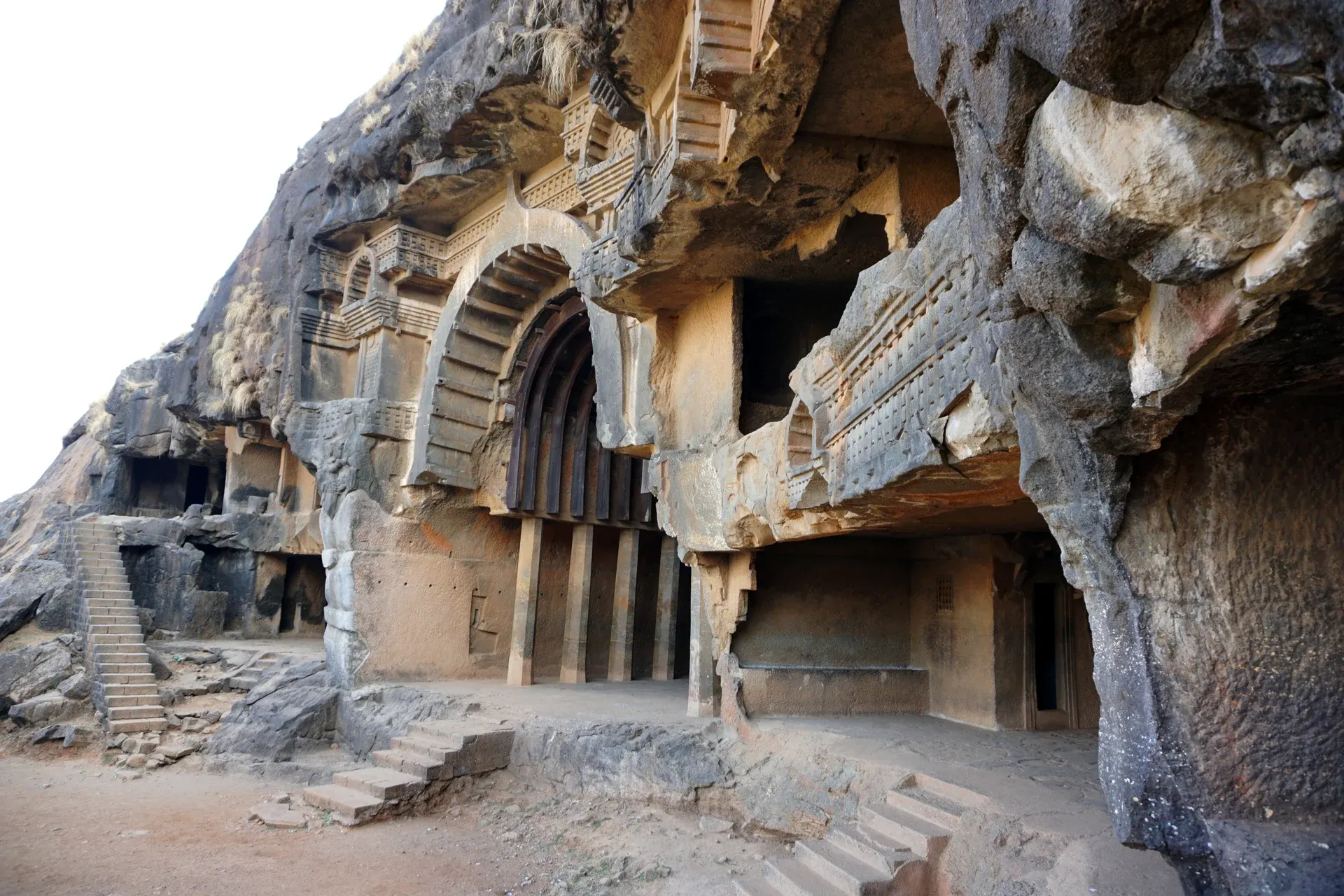
Cover photo: Bhaja Caves, Photo Dharma, CC BY-SA 3.0
Bhaja Caves: 2000-Year-Old Example of Rock-Cut Architecture
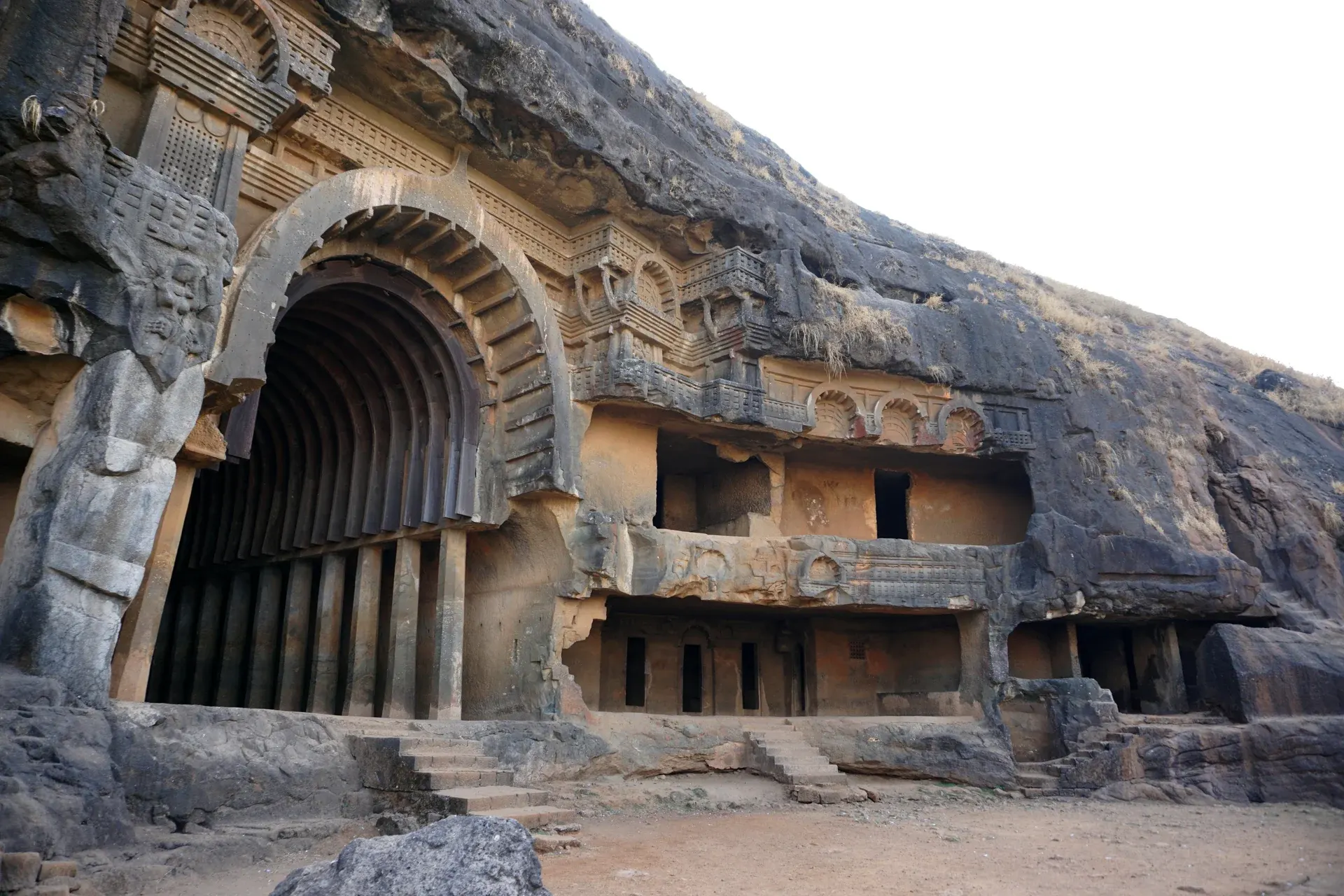
Photo: Photo Dharma, CC BY-SA 3.0
Bhaja caves get their name from the Bhaja village nearby the site. These caves belong to a period of early Buddhist rock-cut architecture, where people were still learning to reproduce architectural forms from wooden materials such as timber. In Cave XII, the Chaitya hall (main prayer hall) has wooden beam imitations carved into stone. These beams show how early architecture was heavily borrowed from wooden construction, where stone was also treated like wood for carvings. This hall is one of the main highlights of visiting Bhaja caves in Lonavala. It has a horseshoe-arched entrance and notable carvings, with walls in Mauryan style.
The other caves are mostly viharas (monasteries) with simple designs, meant for daily living of monks. Some of these caves have verandas with carvings depicting scenes from Buddhist mythology. These were essentially cells where monks lived, meditated and studied more about their faith.
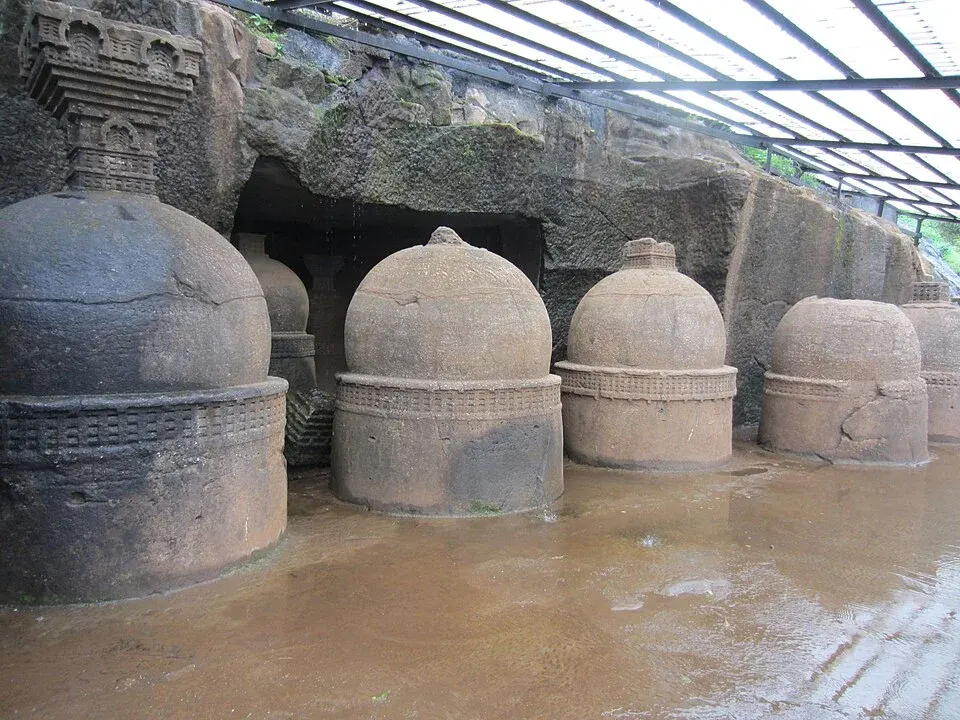
Another important element of the Bhaja caves architecture are the 14 stupas. These rock-cut stupas are associated with funerary traditions, each stupa a relic of resident monks who died at Bhaja. These stupas have names of the monks and their respective titles.
Rediscovery and Significance of Bhaja Caves
The Bhaja caves were actually rediscovered during colonial British rule, and then drawing more attention from historians and archeologists. Prior to that, these caves lay hidden in the hills along the Western Ghats. Once they were recognized, they were examined for their carvings which led to more insights into the life, beliefs and monastic practices of the Buddhist monks.
These caves were not mere residential quarters but also covered spiritual learnings. Daily meditation and religious study underwent into the prayer halls. The site also shows how art and religion were deeply interconnected and reflected a glimpse into the cultural life of that Buddhist era.
Now efforts are ongoing to preserve and protect the site as a Monument of National Importance by the ASI.
So, Is Bhaja Caves Worth Visiting?
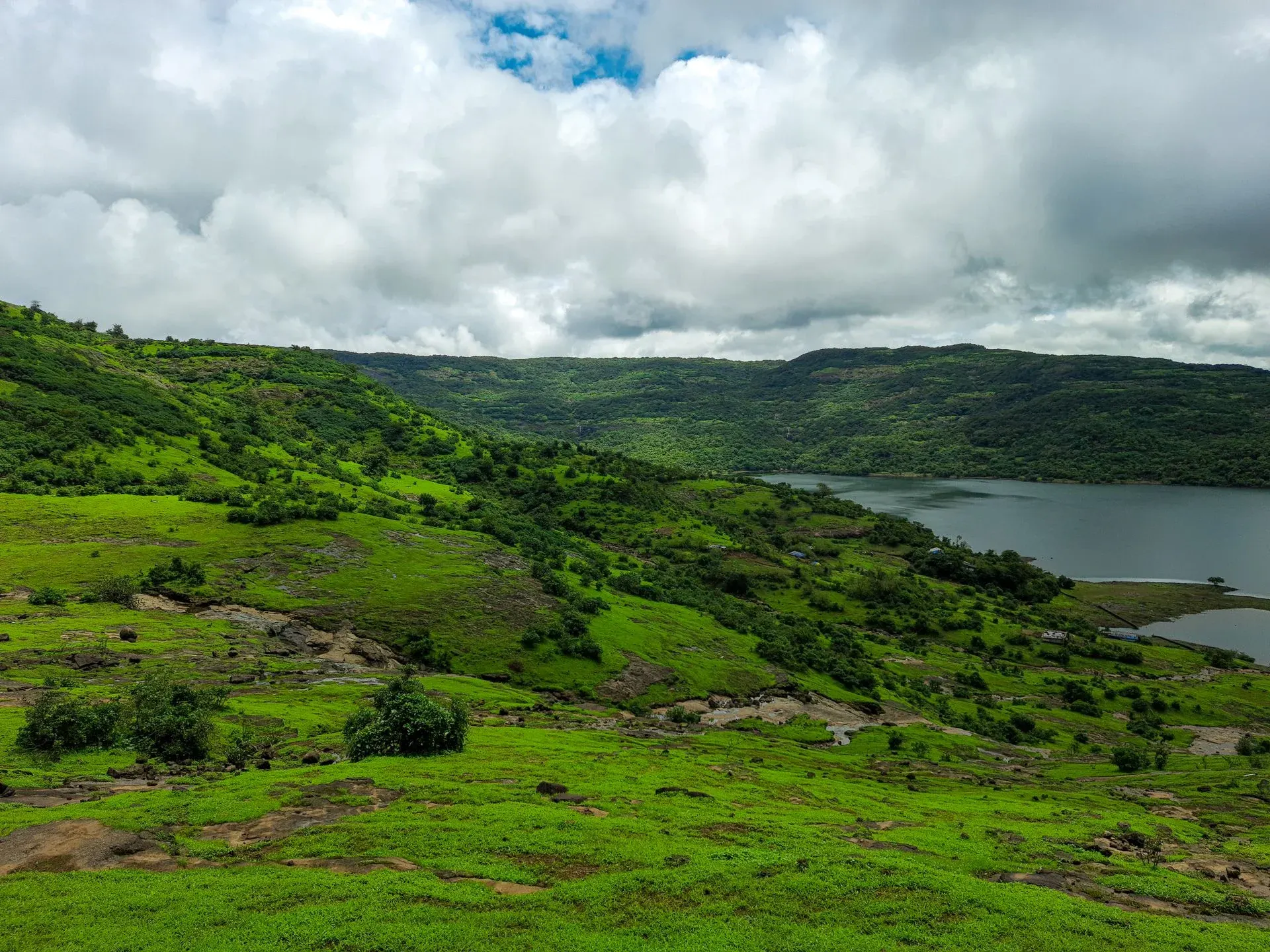
Yes, if you want to add a history lesson to a Lonavala trip without giving up an entire day, you can route to Bhaja Caves. Reaching the caves involves a relatively short climb and offers a scenic overview of the countryside with Sahyadris hills. During the monsoon, the surroundings turn lush and the walk is more scenic.
Bhaja Caves are a good choice if you prefer a less hectic heritage stop than the busier Karla Caves. That said, don't expect an enormous monument complex or elaborate sculptures throughout. Bhaja's appeal lies more in its age, setting and architectural details.
Bhaja or Karla Caves: Where Should I Visit?
Bhaja or Karla Caves, which is better, is a common query people have when exploring Lonavala’s tourist spots.
If you are genuinely interested in learning about Buddhist history, then go to the Karla Caves, which has the largest ancient prayer hall. It has a steeper climb compared to Bhaja, and there is Ekvira Devi temple right next to the caves, so you can visit there too. However, it also makes the place more crowded with pilgrims.
Bhaja caves are more scenic and peaceful comparatively with less commercialization. In the monsoons, nature lovers can head to Bhaja caves when you might see a few waterfalls nearby the caves.
Bhaja Caves makes sense as part of a Lonavala itinerary because it doesn't require you to choose between history and the outdoors. A short climb takes you to an ancient site where the architecture, rock-cut caverns and hillside setting offer a glimpse into the historic past around the region. You can take a short visit here, spend about an hour or so and enjoy the scenic beauty enroute. For a full-day of sightseeing, you can pair your day with Lohagad Fort or Karla Caves. For travellers willing to look beyond Lonavala's usual tiger and lion point or Bhushi dam and waterfalls, Bhaja Caves is a great option. Make a weekend of it at one of our private villas in Lonavala.