Karla Caves History: 5 Things This Ancient Buddhist Cave in Lonavala Reveal
Karla Caves in Lonavala are among the oldest and most important examples of Buddhist rock-cut architecture in India. Located about 11 km away from Lonavala, these are also called Karli Caves or Karle Caves and date back to the 2nd century BCE and the later centuries. Walking through this cave complex is stepping into a history lesson, during the period of Buddhism when traders and Satavahana dynasty rulers offered grants to construct such structures. The inscriptions within keep a record of all these names as some parts of history remain etched on its walls. Read on to know 5 interesting facts about the Karla Caves history that will make you feel learned on your next visit here.
What Makes Karla Caves One of Lonavala's Important Historical Sites?
1. Karla Caves Were Part of a Much Larger Buddhist Landscape
The Karle Cave shrines were developed over the period from the 2nd century BCE to the 5th century CE. During this period, India saw several Buddhist rock-cut cave structures. Sites like Bhaja, Bedse, Junnar and Nashik also have similar cave structures. Karla Caves were associated with Mahāsāṁghika, an early Buddhist sect in India.
While they were majorly used for worship and residence, these caves also saw religious gatherings. Karla Caves is famous for the scale of the Great Chaitya (Cave no. 8), or the community prayer hall. It is the largest surviving example of Buddhist rock-cut architecture in India.
2. The Caves Were Closely Connected to Ancient Trade Routes
The location of Karla Caves is on an important trade route connecting the western coast (Arabian Sea ports) with settlements in the interiors of the Deccan. About 2,000 years ago, merchants, traders, travellers and other communities that passed through this region made these caves their pitstop.
Buddhist monks built their monasteries close to trade routes to offer food and shelter to such travellers. In return, wealthy merchants paid for the carving and decoration of the shrines. Karla and Bhaja caves were supported by this growing economy. The connection between trade and Buddhism is inscribed on the walls.
3. Great Chaitya Reveals Early Buddhist Worship Practices
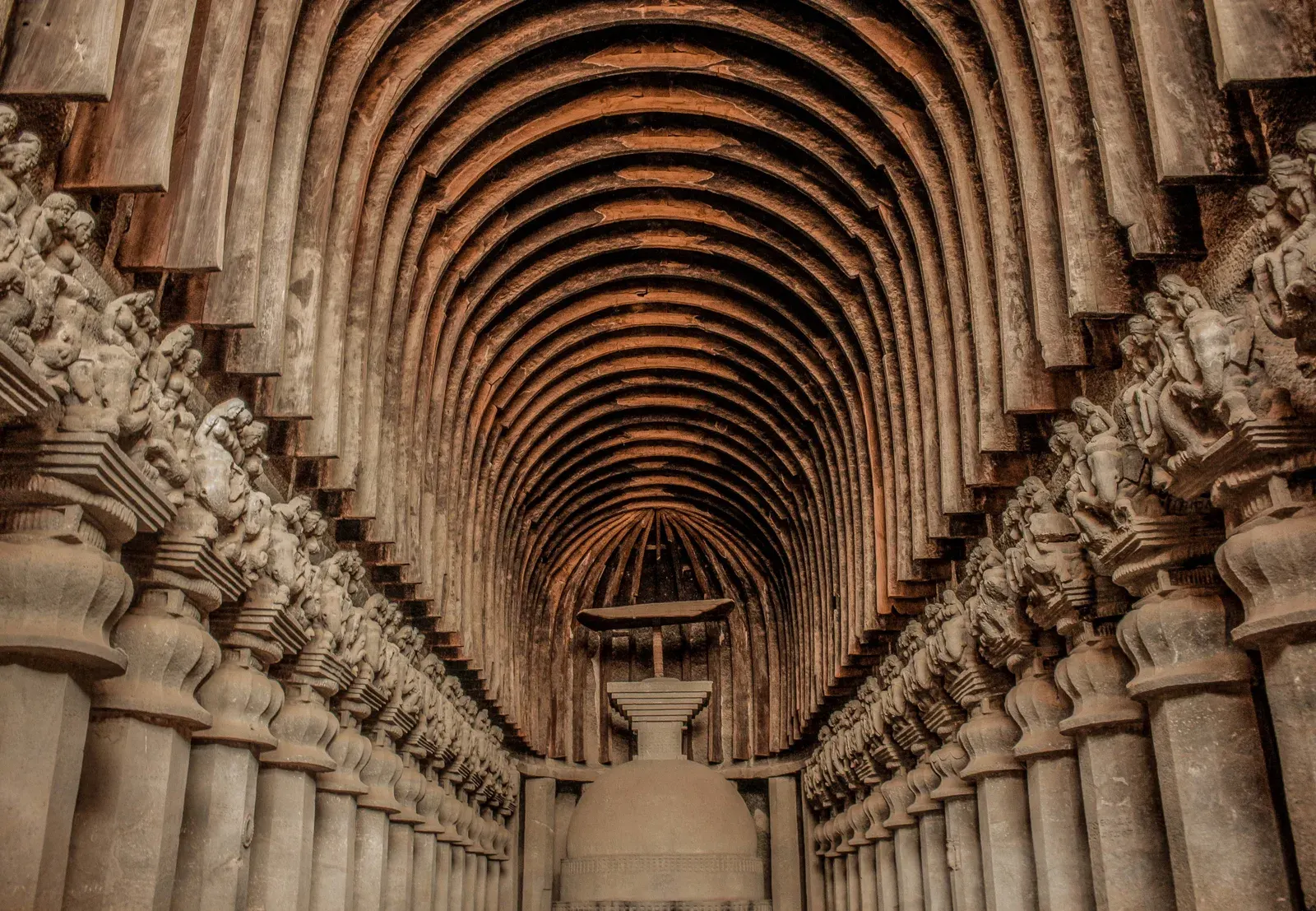
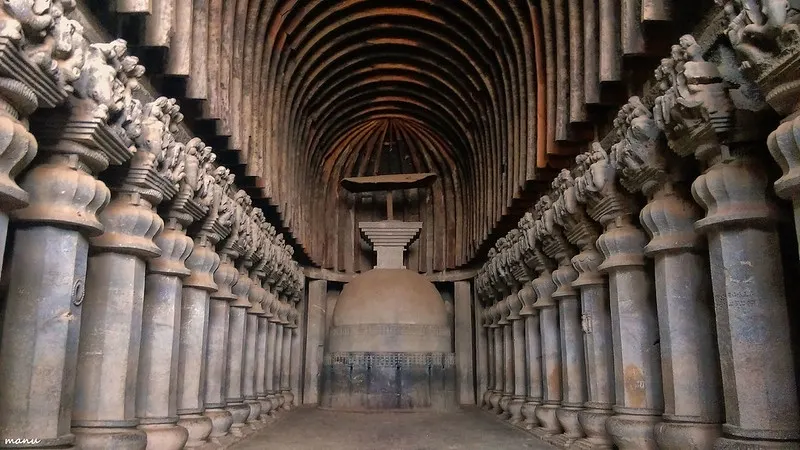
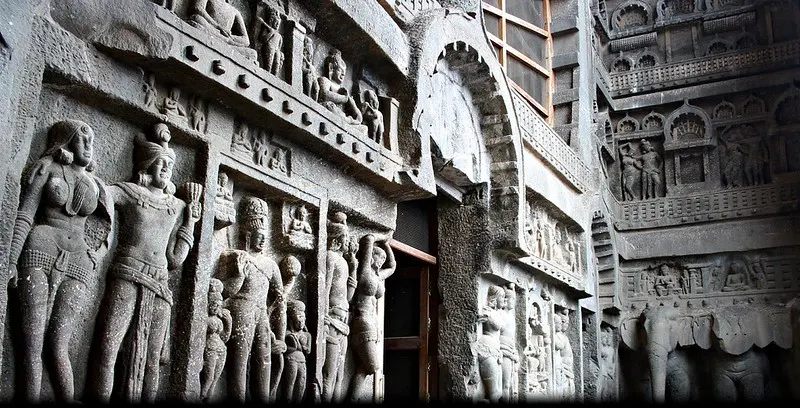
Out of all the 16 caves, Cave no. 8 which represents the Great Chaitya is the most prominent part of Karla Caves, and also maybe the most photographed aspect of the site. This was an ancient prayer hall measuring 45.7 metres long, 25 metres wide and about 16 metres high. The chaitya, the largest rock-cut one in India, has intricate carvings and sculptures depicting Buddha, Bodhisattvas and various Buddhist motifs along with animals like lions and elephants.
The chaitya follows the usual pattern but it is distinctly large at Karla Caves. Two rows of pillars divide the hall into a wide central aisle and narrow side aisles. In fact, it followed a long tradition of how Chaitya halls were carved across western India and was gradually refined in the Karla Caves.
Unlike a simple enclosed shrine, a chaitya was designed as a space where worshippers could gather and move around a sacred stupa. The central aisle leading to the stupa makes it the focus of the hall. Worshippers could walk around the stupa as part of their devotional practice.
4. Inscriptions at Karla Caves Give Another Peek Into Its History
There are 20–22 Brahmi-script and Prakrit inscriptions dating back to the 1st and 2nd century. These inscriptions reveal the names of donors who helped construct the caves. As per some of these, the Western Satraps of Saka and Satavahana rulers were the ones to donate for the building and maintenance of these caves. Some town names mentioned in these remain unidentified locations. Yavanas (Greeks) were among the many donors and local merchants who helped construct the chaitya cave.
5. The Caves Preserve Traces of Monastic Life
Karla Caves were not just a place of worship. The smaller caves have viharas or residence space, where Buddhist monks lived for days and practised their faith. These rooms are carved out on separate floors and connected via stone stairs. They have a small window for light to enter while monks sat to meditate. Small, faded traces of art can be found on some pillars inside the main prayer hall. There is one painting at the top of the 10th pillar on the side of the entrance in this Chaitya cave. It’s easy to miss without a flash or light source.
Karla Caves history is easier to appreciate when you understand the fact that they are 2,000 years old. The site brings together early Buddhist architecture, ancient trade networks, inscriptions from individual donors and centuries of religious significance in Buddhist history. These caves have been one of the sources of inspiration for other similar cave complexes. So, if you’re an avid history buff, you should not miss this one.
FAQs
1. How to reach Karla Caves from Lonavala?
Karla Caves are around 11 km from Lonavala and you can take an auto-rickshaw or private vehicle till the spot. It takes about 20–25 minutes.
2. Is there an entry fee for Karla Caves?
Yes, an entry fee of INR 25 per person is charged to visit Karla Caves. There is no entry fee for children below 15 years.
3. How much time does it take to climb Karla Caves?
The climb from the base takes roughly 20 minutes, with around 300–350 steps to reach the cave complex.
4. What are Karla Caves timings to visit?
Karla Caves are generally open from around 9 AM to 5 PM daily.
5. Are Karla and Bhaja caves the same?
No. Karla and Bhaja are two separate ancient Buddhist cave complexes near Lonavala, located roughly 7 km apart.